
⚔️ Knight of Swords in Love: When “We Need to Talk” Turns Into a Battle
They text, call, demand an answer, and suddenly want to talk about everything right now. It can look like passion, until you realize they may be chasing clarity more than closeness. In this article, we will explore how the Knight of Swords reveals direct communication, confrontation, impulsive decisions, and the crucial difference between intense pursuit and genuine love.
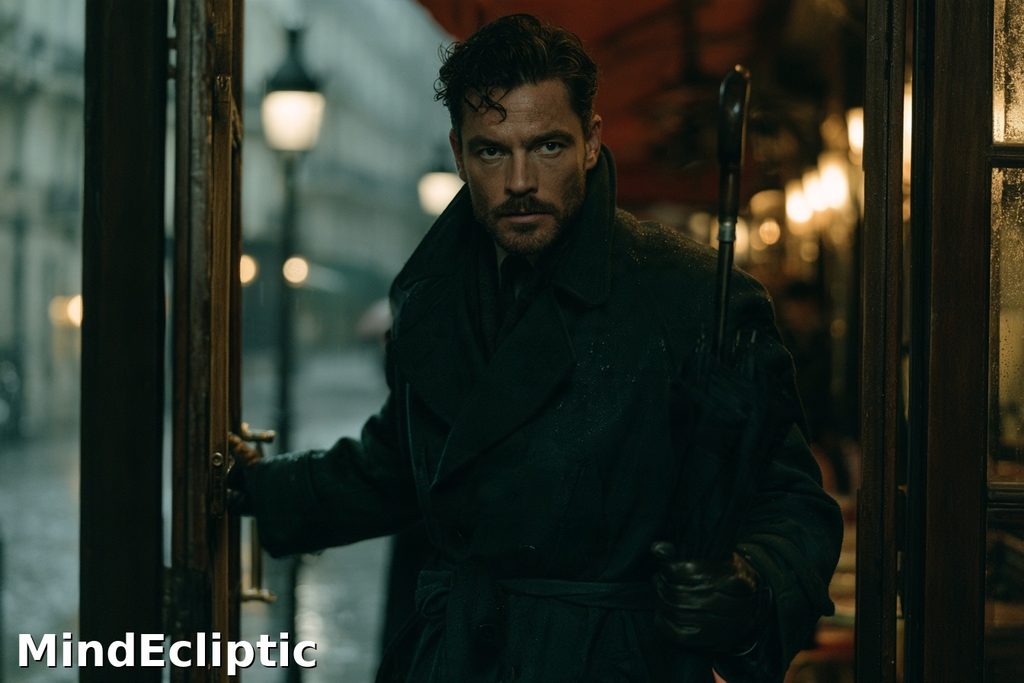
The Knight of Swords does not like sitting with uncertainty. If something feels wrong, unclear, inconsistent, or unfinished, this person wants to address it, preferably immediately.
Has the Knight of Swords appeared in your love reading? Then expect movement. A message may arrive. A conversation may suddenly happen. Someone may finally ask the question that has been hanging between you for weeks. A relationship that felt stuck can move quickly toward clarification, commitment, conflict, or even a breakup.
That speed is what makes this card so easy to misread.
Someone who sends ten messages, calls unexpectedly, turns up wanting to talk, or insists on resolving the situation may look deeply emotionally invested. Sometimes they are. But with the Knight of Swords, activity does not automatically equal love. The driving force may be the need to know the truth, settle an argument, defend a position, or reach a decision.
The Page of Swords watches and gathers information. The Knight of Swords has had enough of watching. He wants an answer.
And preferably now.
🃏 Knight of Swords in a Romantic Tarot Context
The Knight of Swords is the archetype of the challenger, truth-seeker, and fast-moving communicator. He has moved beyond the Page’s passive observation, but he has not yet reached the emotional discipline and intellectual control of the King of Swords.
He thinks quickly, speaks quickly, and often acts on a conclusion almost as soon as he reaches it. In relationships, this makes him decisive, direct, mentally stimulating, and capable of breaking through situations that have remained unresolved for too long.
But his greatest strength is also his greatest weakness: his mind can move faster than emotional reality.
Love is rarely a clean logical problem. People need time to understand their feelings. Two contradictory emotions can be true at once. A partner may need space before answering an important question. The Knight of Swords struggles with this because uncertainty feels inefficient, evasive, or even dishonest.
At his best, he brings necessary conversations into the open. He asks what everyone else is avoiding, identifies the real problem, and pushes the relationship toward an honest decision.
At his worst, he turns communication into combat. Questions become interrogation, honesty becomes cruelty, urgency becomes pressure, and the desire to understand becomes the need to win.
The Knight of Swords vs. the Page of Swords
The difference is simple but important.
The Page of Swords thinks: “I’ll watch. I’ll check. I’ll gather information and see what happens.”
The Knight of Swords thinks: “Enough. Tell me what is happening.”
The Page may watch your social media for two weeks without saying anything. The Knight may wait twenty minutes before sending: “Can you explain what’s going on?”
The problem is that the conversation he starts can easily become a three-hour argument.
💘 Knight of Swords in New or Potential Relationships
In a new connection, the Knight of Swords usually brings acceleration. Messages become more frequent, questions become more direct, and uncertainty becomes difficult to maintain. This can be refreshing if both people want honesty. It can feel overwhelming if one person needs more time.
Bright Side
• Direct communication: This person is usually willing to say what is bothering them instead of silently observing for weeks. If something feels unclear, they would rather address it than build an elaborate private theory.
• Initiating the serious conversation: When a connection has stalled in the “what are we?” stage, the Knight of Swords may be the one who finally raises the subject. He does not enjoy indefinite ambiguity.
• Seeking definition: He wants to know whether the attraction is mutual, whether the relationship is exclusive, and whether there is an actual direction. His questions can bring useful clarity very early.
• Quick decision-making: He is unlikely to spend months wondering whether he should text, call, ask you out, or raise an important issue. Once he believes action is necessary, he usually acts.
• Moving from thought to action: Unlike the Page, who can remain in observation mode, the Knight wants his conclusions tested in reality. He asks, speaks, confronts, and decides.
• Openly addressing disagreement: He does not necessarily see conflict as a sign that the relationship is failing. Sometimes he sees a difficult conversation as the fastest way to discover whether the connection has real potential.
• Preference for honesty: An uncomfortable answer is often easier for him to tolerate than a vague one. In a healthy expression, he would rather hear “I’m not ready” than receive mixed signals for weeks.
• Asking direct questions: “Do you actually want this?” “Are you seeing someone else?” “What changed?” His style can be intense, but the questions themselves often reach the heart of the issue.
• Intellectual chemistry: Conversation matters enormously. A quick mind, humor, debate, curiosity, and the ability to challenge his ideas can create stronger attraction than conventional romantic gestures.
• Attraction to intelligence: He may become fascinated by the way someone thinks before he knows what he feels emotionally. A stimulating conversation can be a major source of chemistry.
• Seeing the core problem quickly: Where other people become lost in details, the Knight can often identify the central issue: “We’re not fighting about texting. We’re fighting because neither of us trusts where this is going.”
• Comfort with uncomfortable topics: Ex-partners, exclusivity, money, sex, boundaries, commitment, betrayal, long-term expectations — he is usually more willing than many cards to put difficult subjects on the table.
Shadow Side
The same speed that creates clarity can make a new relationship feel like an emergency before it has even had time to develop.
• Speaking before considering the impact: A thought appears and becomes a sentence almost immediately. He may be factually correct but emotionally careless.
• Making decisions too quickly: One uncomfortable interaction can become “This clearly isn’t going to work.” A few hours later, he may realize he reacted to the moment rather than the relationship.
• Forcing conversations at the wrong time: If he wants to discuss something now, he can struggle to understand why the other person needs an evening, a day, or even an hour to think.
• Demanding immediate answers: Silence feels intolerable. “Why aren’t you answering?” “It’s a simple question.” “Just tell me.” His need for certainty can become pressure.
• Not allowing processing time: He may interpret reflection as avoidance, when the other person is simply trying to understand what they feel.
• Turning questions into interrogation: One question leads to another, then another. The other person stops feeling like a romantic interest and starts feeling like a witness under examination.
• Arguing to win: Once disagreement begins, proving his interpretation can become more important than understanding what the other person means.
• Needing the last word: An unfinished argument can stay active in his mind long after both people should have stopped talking.
• Interrupting: He believes he already understands where the sentence is going, so he answers before the partner has finished explaining.
• Treating his interpretation as obvious truth: “It’s obvious what happened.” “Anyone would see this.” Confidence can arrive long before all the facts do.
• Black-and-white thinking: Honest or dishonest. Interested or uninterested. Together or not together. Emotional complexity frustrates him because it refuses to fit into a clean conclusion.
• Low tolerance for ambiguity: Early relationships naturally contain uncertainty, but the Knight may demand definition before either person genuinely knows what the relationship is becoming.
• Trying to solve feelings with logic: If someone says, “That hurt me,” he may respond by explaining why his behavior was objectively reasonable instead of addressing the hurt.
• Invalidating emotions with arguments: Feelings become something to debate. He may explain why someone “shouldn’t” be jealous, upset, confused, or afraid.
• Sharp language: Directness can become bluntness very quickly, particularly when he feels misunderstood.
• Sarcasm: Humor can become a weapon designed to make the other person feel foolish rather than understood.
• Knowing exactly where to hit verbally: A perceptive Knight of Swords quickly identifies another person’s insecurities. In conflict, the temptation to use that knowledge can be strong.
• Cruel honesty in anger: He may say something unnecessarily harsh and later defend it with, “I was only telling the truth.”
• Creating conflict to release tension: Sometimes the relationship is not actually facing a major problem; he simply cannot tolerate the unresolved tension and pushes until something erupts.
• Provoking confrontation: A calm conversation could have worked, but urgency turns it into a showdown.
• Not knowing when to stop: Once a subject is open, he wants a conclusion. Emotional exhaustion is not always enough to make him pause.
• Pursuing someone for a conversation: Ten messages, a call, another message, then a follow-up because “we haven’t resolved this yet.” His need for completion can become intrusive.
• Ignoring a request for space: A partner’s pause may be interpreted as avoidance, punishment, or manipulation rather than a legitimate emotional need.
• Impulsive messaging: Long texts, questions, accusations, explanations, and counterarguments can arrive rapidly after conflict.
💍 Knight of Swords in Long-Term or Committed Relationships
In an established relationship, the Knight of Swords can be the person who refuses to let problems rot quietly. That is valuable. But if emotional maturity does not grow alongside his communication skills, every difficult subject can become a courtroom.
Positive Aspects
• Protecting the relationship: If he believes the partnership is being unfairly attacked, misunderstood, or undermined, he can defend it fiercely and immediately.
• Protecting personal boundaries: He usually knows when something crosses a line and is willing to say so clearly rather than silently accumulating resentment.
• Defending a partner verbally: His strength is not necessarily physical protection. He protects through language, answering criticism, challenging unfair accusations, and articulating what the partner may struggle to say.
• Responding quickly to problems: He does not assume serious problems will disappear on their own. When something happens, his instinct is to address it and find a solution.
• Rejecting passive aggression: In a mature expression, he prefers an honest disagreement to days of silent punishment, hints, or emotional games.
• Ending toxic uncertainty: Sometimes a relationship desperately needs someone to ask the question nobody wants to ask. The Knight can finally force a decision that both people have postponed.
• Fighting for the relationship: If he believes the relationship can be repaired, he can become intensely active, initiating conversations, suggesting solutions, and refusing to let a solvable problem destroy the partnership.
• Clarifying misunderstandings quickly: A mature Knight does not spend a week inventing motives. He asks what happened and gives the partner an opportunity to explain.
• Realistic view of love: He tends to understand that attraction alone does not solve practical incompatibilities, communication problems, or conflicting expectations.
• Detecting contradictions: When words and actions do not match, he notices. This can be extremely valuable when a relationship contains avoidance, dishonesty, or inconsistent promises.
• Persuasive communication: When he wants to preserve the relationship, he can explain his position clearly, argue for change, and make a compelling case for a solution.
• Need for genuine exchange: He does not only want to deliver a speech. At his best, he wants a partner who can answer, challenge him, disagree intelligently, and contribute actively to the conversation.
• Creating movement: Relationships under this card rarely remain frozen. A conversation happens, a boundary is set, a misunderstanding is resolved, the status changes, or a decision is finally made.
Challenging Aspects
In a long-term partnership, the real danger is not that the Knight avoids communication. It is that he communicates so aggressively that the other person eventually stops feeling safe enough to communicate back.
• Sudden return after a breakup: He may reappear unexpectedly, but this does not necessarily mean he misses you or wants the relationship back. He may simply need another conversation, another answer, or one final clarification.
• Returning for closure rather than reconciliation: This distinction is essential. A dramatic message after weeks of silence can mean, “I need to settle this in my head,” not “I want to rebuild our relationship.”
• Activity mistaken for love: Calls, messages, surprise appearances, demands for conversation, and intense focus can look romantic. Sometimes the motivation is simply psychological urgency.
• Intensity mistaken for depth: The Knight of Swords can create enormous emotional noise without necessarily creating emotional intimacy. Intensity is not the same as depth.
• Sudden pursuit without long-term intention: A burst of communication may disappear as soon as the question that triggered it is answered.
• Speed mistaken for sexual passion: Unlike the Knight of Wands, his urgency is not necessarily erotic. He may be excited by the confrontation, the answer, or the intellectual challenge rather than by physical desire.
• Entering and leaving abruptly: He can rush back into a relationship, obtain clarity, make a conclusion, and leave just as quickly.
• Impatience: Slow emotional repair is difficult for him. He wants progress that can be seen, named, and measured.
• Discomfort with slow relationship development: “Let’s see where this goes” may frustrate him if he believes enough information already exists to make a decision.
• Demanding definition too early: The need to know can become stronger than the relationship’s natural pace.
• Premature ultimatums: “Either we are together or we aren’t.” “Either you trust me or this is pointless.” Complexity becomes compressed into binary choices.
• Excessive confidence in his reasoning: His argument may be coherent and still be wrong because human relationships contain information that logic alone cannot capture.
• Arguing with another person’s feelings: He may literally tell someone that their emotional interpretation is incorrect.
• Listening only to prepare the next argument: The conversation looks mutual, but he is waiting for his turn to rebut rather than genuinely absorbing what is being said.
• Turning partnership into intellectual combat: Every disagreement becomes a contest of reasoning, evidence, memory, and verbal speed.
• Competing with the partner: Who remembers correctly? Who has the better argument? Who is more rational? The relationship starts producing winners and losers.
• Intellectual humiliation: Statements such as “Do you even hear yourself?” or “That makes absolutely no sense” can undermine emotional safety and self-respect.
• Delivering painful truth without care: Honesty does not automatically make communication healthy. Timing, tone, and compassion still matter.
• Using directness to justify cruelty: “I’m just honest” becomes an excuse for saying things that could have been expressed clearly without being destructive.
• Acting from irritation rather than love: He may rush toward confrontation because he wants relief from his own frustration, not because the conversation will help the relationship.
• Mistaking conflict chemistry for connection: Repeated arguments create adrenaline, urgency, and emotional intensity. That can feel like passion even when the relationship is primarily bonded through conflict.
• Emotional coldness after the argument: Once the issue is logically resolved, he may consider it finished. His partner may only then begin processing the emotional damage.
• Difficulty staying vulnerable: When a conversation becomes emotionally raw, he often retreats into facts, analysis, or debate because those feel safer.
• Fear of appearing weak: Anger and argument may come more easily than saying, “That frightened me,” “I felt rejected,” or “I’m afraid of losing you.”
• Difficulty naming his own feelings: He can explain exactly what happened, why it happened, and what should happen next while remaining unable to say what the experience actually did to him emotionally.
• Using intelligence as armor: Analysis protects him from vulnerability, but it can also prevent the partner from reaching him.
• Rationalizing harmful behavior: Because he is verbally skilled, he can usually construct a logical explanation for why his reaction, accusation, or decision was supposedly necessary.
• Treating the relationship like a problem to solve: The partner may start feeling like a malfunctioning system rather than a person who needs understanding, affection, and emotional care.
• Lack of warmth after conflict: The discussion ends, the conclusion is reached — but there may be no hug, reassurance, emotional repair, or tenderness afterward.
• Unstable decisions: Unlike the Page, who hesitates because he does not know what he wants, the Knight may know exactly what he wants at 9 p.m. and reverse the decision by morning because the original conclusion was made too quickly.
• Abruptly ending the relationship: If he believes he has discovered betrayal, dishonesty, or a fundamental incompatibility, he can cut the relationship off with startling speed.
• Burning bridges too early: A problem that might have been repairable becomes final because anger and certainty arrive before perspective.
• Returning with a new argument: Even after a breakup, the conversation may continue in his head. He can come back days or weeks later because he has thought of something else that “needs to be said.”
⚠️ Pitfalls and Shadow Side of the Knight of Swords in Love
• Confusing urgency with importance: Something feels unbearable right now, so it is treated as if it must be resolved immediately.
• Confusing confrontation with communication: Speaking openly is healthy; forcing a partner into a discussion before they are ready is not.
• Believing truth requires brutality: Accuracy and cruelty are not the same thing.
• Treating emotional processing as avoidance: A partner who needs time may be processing, not hiding.
• Making permanent decisions in temporary emotional states: Anger can create certainty that disappears once the nervous system settles.
• Using questions as pressure: A direct question stops being healthy when “I need time” is not accepted as an answer.
• Mistaking persistence for commitment: Continuing to call or argue may show unresolved mental tension rather than devotion.
• Mistaking conflict for chemistry: A relationship can feel intensely alive simply because both people are constantly activated.
• Winning the argument and losing the relationship: Being correct does not repair humiliation, fear, or emotional disconnection.
• Expecting logic to repair emotional injury: A perfect explanation cannot substitute for empathy.
• Turning vulnerability into strategy: Instead of saying what hurts, the person attacks, debates, or demands information.
• Making every disagreement a verdict on the relationship: Not every difficult conversation requires a final decision.
• Leaving no room for emotional ambiguity: People can love each other and still be uncertain, angry, frightened, or confused.
• Solving the issue but ignoring the aftermath: A conflict can be logically resolved while emotional trust remains damaged.
• Using speed to avoid deeper reflection: Moving quickly toward a conclusion can prevent the person from asking why the situation affected them so strongly in the first place.
🔗 Key Combinations: Knight of Swords with Other Cards in Romance
When reading combinations, position matters. The interpretations below assume the Knight of Swords appears before the second card, showing where his urgency, confrontation, or decision is heading. If he appears after another card, that first card may instead describe what triggers his sudden action.
Knight of Swords + The Lovers. A decision in love can no longer be postponed. Someone may demand clarity about commitment, exclusivity, or a choice between two people. In a positive expression, the conversation finally produces an honest decision. In shadow, pressure replaces genuine choice: the person wants an answer so badly that they push the partner into deciding before they are emotionally ready.
Knight of Swords + The Devil. Conflict becomes compulsive. Arguments, accusations, verbal manipulation, jealousy, or obsessive communication can keep two people psychologically hooked into each other. Someone may repeatedly return to provoke another conversation because they cannot tolerate losing control of the dynamic. This can also indicate highly persuasive manipulation, intelligence and verbal skill being used to dominate rather than resolve.
Knight of Swords + The Moon. Urgency meets uncertainty, which is a dangerous combination. The person may confront someone based on incomplete information, fear, assumptions, or a misunderstanding and become convinced that their interpretation is correct. In some readings, there may genuinely be deception underneath the confusion; in others, suspicion itself creates the crisis. The advice here is simple: verify before attacking.
Knight of Swords + The Tower. An explosive confrontation or revelation changes the relationship rapidly. A truth may come out during an argument, someone may suddenly end the relationship, or a conversation may expose a problem that can no longer be ignored. This combination can indicate the kind of discussion after which the relationship cannot simply return to normal.
Knight of Swords + The Sun. Clarity arrives quickly. A direct conversation, decisive action, or uncomfortable truth can finally resolve uncertainty and move the relationship forward. In shadow, however, the Sun can amplify pride and ego: someone may become convinced that they alone see the situation correctly and use confidence as justification for dominating the conversation.
🎭 Real-Life Examples: Knight of Swords in Action
Rachel had been dating Ben for two months when his messages suddenly became shorter. Instead of watching quietly or checking his social media, she asked him directly what had changed. The conversation was uncomfortable, but he admitted he was unsure whether he wanted a serious relationship. Rachel did not get the answer she hoped for, but she got the truth before becoming more invested. This is the constructive Knight of Swords: clarity through action.
Marcus and Chloe had been arguing about the same issue for weeks. One evening, Marcus sent a long message, called twice, and insisted they settle everything before going to bed. Chloe asked for time to think, but he interpreted the request as avoidance and kept pushing. By midnight, the original problem had become secondary; they were now fighting about the way he communicated. His need for resolution had created a new problem.
After a breakup, Natalie received an unexpected message from Ethan: “We need to talk.” He arrived with questions, explanations, and several things he said he had finally understood. For a moment, she assumed he wanted her back. By the end of the conversation, however, it became clear that he wanted closure, not reconciliation. He needed the story to make sense before he could move on. His return was intense, but the intensity was about resolution rather than love.
💡 Knight of Swords vs. the Other Knights in Love
The Knight of Wands says: “I want you.” His movement is driven by desire, excitement, sexual energy, and the thrill of pursuit.
The Knight of Cups says: “I feel something for you.” He moves through romance, emotional expression, seduction, affection, and the desire to create emotional closeness.
The Knight of Pentacles says: “I want to build something with you.” His movement is slow, stable, practical, and consistent. He proves intention through reliability.
The Knight of Swords says: “I need to know what is happening between us.” His primary drive is clarity. He wants the answer, the conversation, the truth, the decision, or the solution.
That distinction matters enormously in a love reading.
A Knight of Swords who suddenly calls, writes, appears, or demands a conversation may indeed be fighting for the relationship. But he may also simply be unable to rest until the unresolved question between you has an answer.
His intensity tells you that the situation matters to his mind. It does not automatically tell you how deeply it lives in his heart.
💡 Advice and Takeaway: What the Knight of Swords Wants You to Know About Love
• Ask the difficult question, but allow the other person time to answer it.
• Choose honesty without using honesty as permission to be cruel.
• Remember that being right and being emotionally connected are different goals.
• Do not mistake urgency, repeated messages, or confrontation for proof of love. Look at what happens after the conversation.
• Before making a final decision, ask whether you are responding to the relationship itself or simply trying to escape the discomfort of uncertainty.
The Knight of Swords can change a relationship in one conversation. Sometimes that conversation saves months of confusion. Sometimes it destroys something that could have survived with more patience.
His lesson is not to speak less. It is to understand that truth needs timing, listening, and emotional intelligence if it is meant to create closeness rather than simply win the argument.
And perhaps the most important question this card asks in love is not, “What do you need to say?”
It is:
Once you finally get your answer, what are you actually going to do with it?
📌 This article is part of the MindEcliptic.com Romantic Tarot series (AvaRomance). For more on Tarot archetypes and relationship wisdom, explore our other card guides and share your own Knight of Swords stories in the comments below.
—
If this article was helpful and you’d like to say thank you, you can buy me a coffee here.