The Wheel of the Year, Reimagined: Discover MindEcliptic’s Free Interactive Calendar
You know the four seasons. But do you know the eight festivals that mark their turning points? Explore the folklore, symbols, and traditions behind each one with MindEcliptic’s exclusive, completely free interactive Wheel of the Year calendar.
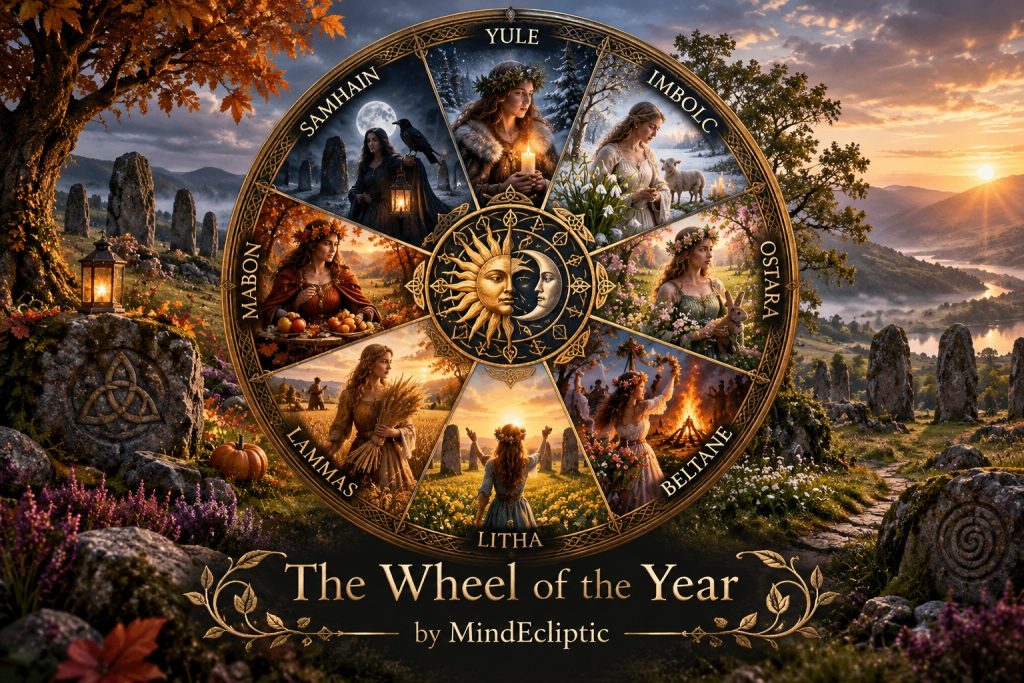
A bonfire welcoming the arrival of summer. Freshly baked bread celebrating the first harvest. A candle glowing on the longest night of winter. These traditions may seem worlds apart, but they share a place on the Wheel of the Year, a seasonal calendar that follows the changing rhythms of nature through eight festivals known as sabbats.
Celebrated in modern Pagan and Wiccan traditions, the Wheel marks the solstices, equinoxes, and four additional seasonal turning points. Each festival has its own history, symbolism, and customs, reflecting the ways people have understood their relationship with nature throughout the centuries.
We’ve now brought this fascinating cycle into an interactive format with the exclusive, completely free Wheel of the Year Calendar created for MindEcliptic. Featuring original illustrations, detailed festival guides, and dates from 2026 through 2100, the calendar lets you explore the eight sabbats at your own pace, discovering the stories behind each celebration.
Why the Wheel of the Year Is More Than a Calendar
Most of us organize the year around numbered dates, appointments, and holidays. The Wheel of the Year offers a different perspective, one that places the seasons themselves at the center of the calendar. Winter isn’t simply the end of a year, just as spring isn’t merely the beginning of warmer weather. Each season represents a stage in an ongoing cycle of growth, abundance, decline, and renewal.
Four sabbats correspond to astronomical events: the winter and summer solstices and the spring and autumn equinoxes. The other four fall between these turning points and are associated with traditional seasonal observances, including the beginning of summer, the first harvest, and the arrival of winter.
Interestingly, the eightfold Wheel is not a single ancient calendar preserved unchanged for thousands of years. Although several of its festivals have much older roots, the complete system developed within modern Pagan movements during the twentieth century. It brings together traditions from different historical backgrounds, including Celtic seasonal festivals, European folklore, and more recent spiritual interpretations.
That layered history is part of its appeal. Every sabbat offers an opportunity to discover how earlier communities experienced the changing seasons and how some of those customs continue to inspire people today.
Meet the Eight Sabbats of the Wheel of the Year
The cycle begins with Yule, celebrated at the winter solstice, when the longest night gives way to gradually increasing daylight. Evergreens, candles, and firelight are among the symbols associated with this season. Several weeks later comes Imbolc, observed around February 1–2. Traditionally connected with the beginning of spring in the Gaelic seasonal calendar and with the figure of Brigid, Imbolc reflects the first subtle changes taking place while winter still holds the landscape in its grip.
At the spring equinox, Ostara celebrates seasonal balance and the return of growth. Seeds, flowers, and emerging greenery provide a natural language for its modern symbolism. Then comes Beltane, traditionally observed around April 30–May 1, with customs associated with bonfires, protection, fertility, and the beginning of summer. Its lively atmosphere offers a striking contrast to the quieter observances of early spring.
Litha, the summer solstice, marks the year’s longest day in the Northern Hemisphere. Midsummer celebrations across Europe have long included gatherings, fires, and traditions connected with sunlight and vegetation. As the days begin to shorten, Lammas and Lughnasadh, associated with August 1, introduce the first harvest. Although their historical origins differ, both have become connected with the gathering of grain, seasonal abundance, and appreciation for the work that sustains communities.
The autumn equinox brings Mabon, a modern Pagan name for a celebration centered on seasonal balance, harvest, and reflection. Finally, Samhain, observed around October 31–November 1, marks the beginning of the darker part of the year in traditional Gaelic seasonal reckoning. Its rich folklore includes stories of the Otherworld, while customs of remembrance and honoring the dead give the festival a particularly reflective character.
These brief descriptions only introduce what makes each celebration distinctive. Behind the familiar names lies a much wider collection of folklore, regional customs, historical interpretations, and seasonal symbolism.
Explore the Wheel of the Year With MindEcliptic
When we began developing our interactive calendar, we wanted to create something that would be enjoyable to explore, not simply another reference page listing Pagan holidays. The result is an original illustrated Wheel featuring eight seasonal scenes, each designed to capture the atmosphere of a particular sabbat.
Using the calendar is straightforward. Start by selecting any year between 2026 and 2100, then click one of the eight illustrated sections of the Wheel. The corresponding festival appears alongside its artwork, date, seasonal meaning, and detailed information. You can move between festivals freely, compare their traditions, or follow the entire cycle from Yule through Samhain.
Each sabbat includes seven expandable sections covering its origins, historical customs, symbols, seasonal plants and colors, folklore, contemporary celebrations, and practical considerations. You might discover why certain flowers are associated with Imbolc, how Beltane bonfire traditions developed, or what makes Samhain’s folklore so distinctive.
We’ve also included a Next Sabbat countdown that automatically identifies the approaching festival and shows how many days remain. For the solstices and equinoxes, the calendar uses astronomical dates for the selected year, displayed according to your device’s time zone. The seasonal cycle follows the Northern Hemisphere.
The entire calendar is free to use, with no registration or downloads required. Whether you’re researching a particular festival or simply curious about the artwork, you can open the Wheel and explore whichever part interests you.
Finding Your Own Connection With the Seasons
You don’t have to practice Paganism or follow a particular spiritual tradition to find the Wheel of the Year interesting. Its festivals also offer a window into history, mythology, regional folklore, and the relationship between people and the natural environment.
Some of the customs may even feel familiar. Decorating with greenery in winter, welcoming spring with flowers, gathering for a summer celebration, or sharing food during the harvest season are practices that appear in different forms across many cultures. Their histories are not necessarily the same, but the importance of seasonal change is something people have recognized in countless ways.
That’s what we hope visitors will enjoy about MindEcliptic’s calendar. You might arrive looking for the date of the next sabbat and end up discovering an unfamiliar tradition, a piece of folklore, or a surprisingly interesting connection between festivals.
Explore the free Interactive Wheel of the Year by MindEcliptic, choose a season that interests you, and see what you discover.
Explore the Free Interactive Calendar
Only official channels listed here: About MindEcliptic
—
If this article was helpful and you’d like to say thank you, you can buy me a coffee here.