The 22 Main Energies of the Destiny Matrix (Part II)
In Part I, we explored the first seven energies of the Destiny Matrix, from the creative power of The Magician to the unstoppable drive of The Chariot. But what happens when the journey moves beyond action, ambition, relationships, and leadership into justice, inner wisdom, fate, personal power, sacrifice, transformation, and balance?
In Part II, we continue through Energies 8–14 and uncover the core personality patterns, strengths, shadows, and Tarot archetypes behind the next seven energies of the Destiny Matrix.
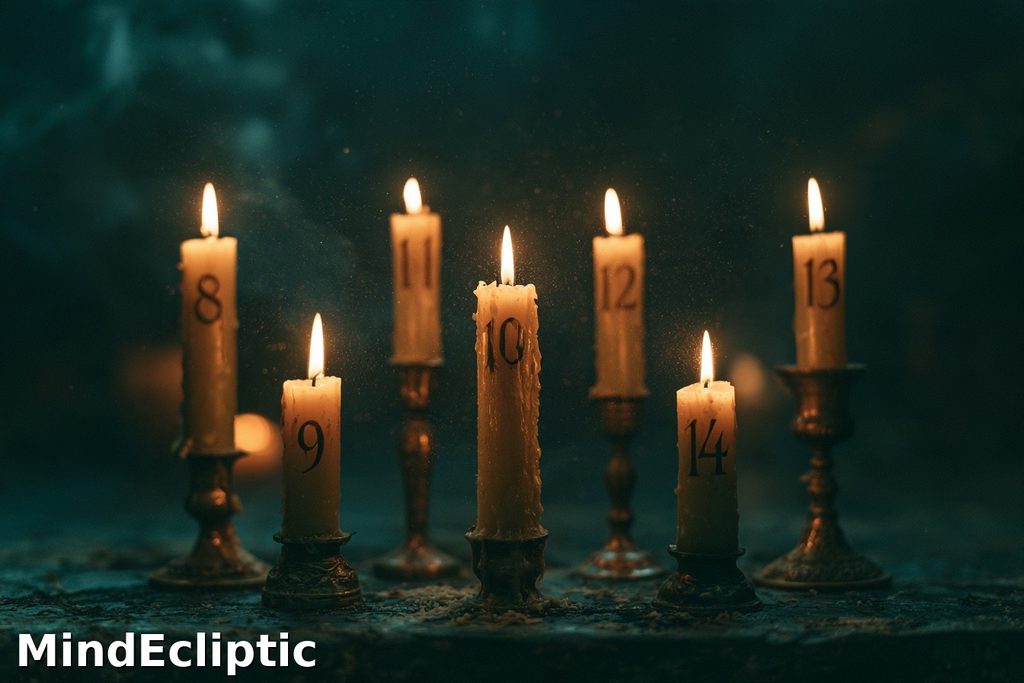
The Destiny Matrix works with 22 archetypal energies, but their meaning becomes progressively more complex as we move through the sequence.
In Part I, we explored Energies 1 through 7: The Magician, The High Priestess, The Empress, The Emperor, The Hierophant, The Lovers, and The Chariot. This second part continues with Energies 8 through 14: Justice, The Hermit, Wheel of Fortune, Strength, The Hanged Man, Death, and Temperance.
As before, we are deliberately focusing on the core character of each energy rather than a specific position in the Matrix. Energy 10 in the Center, for example, is not interpreted in exactly the same way as Energy 10 in finances, relationships, talents, the Karmic Tail, or another area of the chart. The position tells us where the energy operates; the archetype tells us what kind of force we are working with.
Here, we are building that foundation first: the personality tendencies associated with each number, its positive and negative expressions, masculine and feminine manifestations, and its connection with Tarot.
There is also one important numbering difference to understand before we begin.
In the Destiny Matrix, Energy 8 corresponds to Justice and Energy 11 to Strength. Readers familiar with Rider–Waite–Smith Tarot may expect the opposite: in RWS, Strength is VIII and Justice is XI. The Destiny Matrix sequence instead follows the older ordering also found in Tarot de Marseille: VIII Justice and XI Strength.
So if you know Tarot primarily through Rider–Waite, Energy 8 may initially look unusual. It is not a mistake, it is simply a different numbering tradition.
Energy 8: Justice
Core themes: justice, balance, truth, responsibility, fairness, cause and effect, accountability, objectivity, integrity.
Energy 8 is the archetype of balance, consequence, and responsibility. In the Destiny Matrix, Justice represents the relationship between choices and their results, the need to understand cause and effect, and the ability to evaluate situations without allowing emotion alone to decide what is true.
Eight notices imbalance. When something is unfair, inconsistent, dishonest, or unresolved, Justice tends to feel it immediately.
Energy 8 in the Positive
In its positive expression, Energy 8 describes a principled, responsible, fair-minded personality with a strong sense of integrity.
Justice naturally wants to understand what really happened. Instead of accepting the first version of a story, the Eight may instinctively compare facts, motives, actions, and consequences. It can be remarkably good at seeing both sides of a conflict and recognising where responsibility actually belongs.
This creates a strong capacity for objective decision-making. Energy 8 may feel comfortable in areas where rules, contracts, money, law, administration, negotiation, mediation, or accountability matter. There is often a need for agreements to be clear and for people to fulfil what they have promised.
The positive Eight also understands personal responsibility. When something goes wrong, the healthiest expression of Justice does not immediately ask, Who can I blame? It asks: What part of this belongs to me? What created this result? What can now restore balance?
Truth matters, but so does proportion. Positive Justice does not need to punish everyone who makes a mistake. It wants consequences to correspond to actions.
At its best, Energy 8 therefore becomes the archetype of the fair judge, someone capable of combining principles with objectivity and responsibility with perspective.
Energy 8 in the Negative
The shadow of Justice appears when discernment becomes judgment.
Energy 8 can become rigid, critical, unforgiving, moralising, or obsessed with proving who is right and who is wrong. Instead of restoring balance, the person begins keeping an invisible account of every injustice, disappointment, broken promise, or perceived debt.
The idea of fairness can also become highly personal: I behaved correctly, therefore life should reward me correctly.
When reality refuses to follow that equation, resentment can grow. The Eight may feel repeatedly cheated by life, relationships, work, or other people because circumstances do not match their internal understanding of what is deserved.
Another shadow is excessive self-judgment. The same internal court used to evaluate others can be turned inward, producing guilt, perfectionism, and difficulty forgiving oneself for mistakes.
Energy 8 may also become emotionally cold when trying to remain “objective.” Facts matter, but human situations are not always mathematical equations.
The central challenge of Energy 8 is therefore to develop justice without condemnation, responsibility without guilt, and principles without turning life into a permanent courtroom.
Masculine and Feminine Expression
Through a more masculine or outward-directed principle, Energy 8 may appear as decisiveness, rational judgment, respect for rules, responsibility, protection of boundaries, and willingness to confront unfair situations directly.
Through a more feminine or receptive principle, Justice may manifest through emotional discernment, mediation, diplomacy, a strong sensitivity to imbalance, and the ability to recognise what is fair without immediately forcing a conclusion.
These are archetypal tendencies rather than rules based on biological sex. In either expression, Energy 8 seeks equilibrium and accountability.
Connection with Tarot
In the Destiny Matrix, Energy 8 corresponds to Justice.
The scales traditionally associated with Justice represent weighing different sides, while the sword represents clarity, decision, and consequence. The archetype asks us not merely whether something feels fair, but whether choices and results are actually in balance.
This is one of the two points where Destiny Matrix numbering differs from Rider–Waite–Smith Tarot. RWS places Strength at VIII and Justice at XI; the Matrix uses VIII Justice and XI Strength, matching the older Marseille ordering.
Energy 9: The Hermit
Core themes: wisdom, introspection, knowledge, independence, solitude, depth, expertise, self-discovery, inner guidance.
Energy 9 is the archetype of inner wisdom and the search for truth.
The Hermit does not necessarily need the constant movement, attention, or social stimulation that energises many other archetypes. Nine turns inward, observes, studies, thinks, and develops knowledge through personal experience.
Energy 9 in the Positive
In its positive expression, Energy 9 describes a thoughtful, intelligent, independent, and deeply reflective personality.
The Hermit usually needs personal space. Solitude is not necessarily loneliness for this energy; it can be the place where thoughts become clear, knowledge deepens, and emotional balance is restored.
Energy 9 often prefers depth to breadth. Rather than knowing a little about everything, the Hermit may become fascinated by one subject and explore it until genuine expertise develops.
This creates the archetype of the specialist, researcher, thinker, mentor, or wise advisor. Other people may eventually seek the Nine precisely because it has spent so much time understanding something beneath the surface.
The Hermit can also be highly self-sufficient. It does not always need external approval to continue studying, working, or following an individual path.
There is a spiritual dimension to this energy as well. Nine frequently asks questions that cannot be answered by material success alone: What does this experience mean? What have I learned? What is actually true for me?
At its best, Energy 9 therefore transforms solitude into wisdom and personal experience into knowledge that can eventually illuminate the path for others.
Energy 9 in the Negative
The shadow of the Hermit appears when solitude becomes isolation.
A healthy need for privacy may turn into emotional withdrawal. The person can begin believing that nobody understands them, that other people are superficial, or that relationships simply interfere with their inner world.
Knowledge can also become superiority. Instead of becoming wiser through study, the shadow Hermit may become dismissive, critical, intellectually arrogant, or unwilling to learn from people considered less knowledgeable.
Another danger is endless analysis.
The Nine can think so deeply about a decision that reflection replaces action completely. Every possibility is examined, reconsidered, and questioned until the opportunity itself disappears.
Emotional distance may also become a defence. Rather than risk vulnerability, the Hermit stays safely inside their own world.
The central challenge of Energy 9 is therefore to develop solitude without isolation, wisdom without superiority, and reflection without disappearing from life itself.
Masculine and Feminine Expression
Through a more masculine or outward-directed principle, Energy 9 may appear as intellectual independence, expertise, research, self-reliance, mentoring, and a preference for working autonomously.
Through a more feminine or receptive principle, The Hermit may express itself through introspection, intuition, contemplation, emotional depth, quiet observation, and wisdom developed through inner experience.
In either expression, Nine needs enough space to hear its own thoughts, but also enough connection to prevent wisdom from becoming isolation.
Connection with Tarot
In Tarot, The Hermit represents introspection, wisdom, solitude, inner guidance, and the search for truth.
The lantern traditionally carried by The Hermit does not illuminate an entire road at once. It reveals enough to take the next step. This symbolism fits Energy 9 particularly well: wisdom does not always mean having every answer, sometimes it means knowing how to continue searching.
The Destiny Matrix expands this archetype into themes of knowledge, expertise, independence, self-discovery, and personal depth.
Energy 10: Wheel of Fortune
Core themes: change, cycles, luck, opportunity, movement, adaptability, timing, flow, turning points.
Energy 10 is the archetype of cycles, opportunity, and movement through change.
Wheel of Fortune reminds us that life never remains fixed. Circumstances rise and fall, doors open unexpectedly, plans change, people arrive and leave, and what seemed permanent can suddenly move in an entirely different direction.
Energy 10 in the Positive
In its positive expression, Energy 10 describes an adaptable, optimistic, flexible personality with a strong ability to recognise opportunities.
The Ten often seems to function best when life is moving. New circumstances, unexpected offers, travel, changing environments, new contacts, or sudden turns of events can become catalysts rather than threats.
This energy is frequently associated with luck, but its deeper strength is timing.
A positive Ten notices when the wheel has turned. It understands when to act, when to change direction, and when insisting on the old plan would only waste energy.
There can also be an unusual ability to recover after setbacks. Because Wheel of Fortune intuitively understands cycles, it rarely assumes that a difficult period will last forever.
Optimism, openness, curiosity, spontaneity, and flexibility can therefore become major resources.
At its best, Energy 10 knows how to enter the flow of circumstances without abandoning personal agency.
Energy 10 in the Negative
The shadow of Wheel of Fortune appears when trust in life becomes dependence on luck.
Instead of recognising opportunities and acting on them, the person waits: for the right moment, the right person, a miracle, a lucky break, or circumstances to solve the problem automatically.
Instability is another possible shadow. Energy 10 may become addicted to change itself, repeatedly abandoning one project, relationship, job, or direction as soon as something new appears.
Life then becomes a series of beginnings without consolidation.
The Ten may also experience dramatic emotional reactions to natural cycles. When things are going well, everything feels destined; when circumstances change, the person may suddenly believe that luck has abandoned them.
Risk-taking can become excessive when someone assumes that fortune will always provide another escape route.
The central challenge of Energy 10 is therefore to develop flexibility without chaos, trust without passivity, and openness to luck without expecting luck to do the work.
Masculine and Feminine Expression
Through a more masculine or outward-directed principle, Energy 10 may appear as entrepreneurial instinct, risk-taking, mobility, quick decision-making, adaptability, and the ability to seize opportunities rapidly.
Through a more feminine or receptive principle, Wheel of Fortune may express itself through intuitive timing, openness to change, flexibility, social adaptability, and an ability to sense when circumstances are shifting.
In both expressions, the healthiest Ten understands that fortune creates opportunities, but a person still has to recognise and use them.
Connection with Tarot
In Tarot, Wheel of Fortune represents cycles, fate, change, turning points, and forces that cannot be controlled completely.
The wheel rises and falls continuously. No position lasts forever.
The Destiny Matrix retains this symbolism through Energy 10’s themes of luck, opportunity, adaptability, timing, change, and movement with the cycles of life.
Its deeper lesson is simple: you cannot stop the wheel from turning, but you can learn how to move with it.
Energy 11: Strength
Core themes: power, vitality, courage, passion, endurance, potential, self-control, determination, physical and emotional energy.
Energy 11 is the archetype of power, and the ability to control it.
In the Destiny Matrix, Strength occupies position 11 rather than 8. This follows the same ordering as the Marseille tradition, while Rider–Waite–Smith places Strength at VIII.
But the deeper question is not how much strength a person possesses. It is what they do with it.
Energy 11 in the Positive
In its positive expression, Energy 11 describes a powerful, energetic, courageous, passionate, and highly resilient personality.
This energy can produce enormous vitality. The Eleven may work intensely, recover quickly from setbacks, overcome difficult circumstances, and continue where others would already be exhausted.
Strength can manifest physically, emotionally, professionally, creatively, or psychologically. The common element is capacity: there is often simply a lot of energy available.
Energy 11 can therefore be highly productive. When a meaningful goal appears, the person may throw themselves into it completely and accomplish an extraordinary amount.
There is also natural passion here. The Eleven tends to experience desire, motivation, attraction, ambition, and life itself intensely.
But the highest expression of Strength is not aggression.
The traditional image of a person calmly interacting with a lion captures the deeper principle perfectly: true strength does not need to destroy what is powerful, it learns to direct it.
At its best, Energy 11 combines courage with self-control, passion with discipline, and power with emotional maturity.
Energy 11 in the Negative
The shadow of Strength appears when energy becomes force.
The Eleven may become impatient, aggressive, confrontational, domineering, explosive, or convinced that every obstacle must be overcome through pressure.
There may be difficulty accepting weakness: both personal weakness and vulnerability in others. Rest, hesitation, fear, or emotional sensitivity can be interpreted as failure.
Workaholism is another common shadow. Because Energy 11 can carry an enormous amount, the person may assume they must continually prove that capacity.
The result is overexertion, constant pressure, difficulty relaxing, and frustration when others cannot match the same pace.
There is an opposite expression as well. Powerful energy without a meaningful outlet may turn inward, producing irritability, boredom, apathy, or the feeling of enormous unused potential.
The central challenge of Energy 11 is therefore to develop power without aggression, endurance without self-destruction, and strength that does not need to prove itself constantly.
Masculine and Feminine Expression
Through a more masculine or outward-directed principle, Energy 11 may appear as physical courage, competitiveness, sexual energy, ambition, endurance, assertiveness, and a strong drive to overcome obstacles.
Through a more feminine or receptive principle, Strength may manifest as inner resilience, emotional courage, passionate creativity, magnetism, persistence, and the ability to remain composed while managing intense internal energy.
These expressions are not determined by biological sex. In either form, Eleven asks the same question: Can you control your power without suppressing it, and use it without allowing it to control you?
Connection with Tarot
In Tarot, Strength represents courage, inner power, passion, patience, and mastery over instinct.
Importantly, the figure does not defeat the lion through violence. The relationship between human consciousness and animal power is based on calm control.
The Destiny Matrix develops the same principle through Energy 11: vitality, potential, endurance, passion, and the conscious direction of personal power.
Energy 12: The Hanged Man
Core themes: perspective, service, compassion, sacrifice, patience, acceptance, empathy, surrender, unconventional thinking.
Energy 12 is the archetype of a different point of view.
The Hanged Man interrupts ordinary movement. While other energies push forward, Energy 12 asks us to stop, reverse the perspective, and notice what cannot be seen from the usual position.
Energy 12 in the Positive
In its positive expression, Energy 12 describes a compassionate, empathetic, patient, and unusually perceptive personality.
The Hanged Man may understand experiences differently from those around them. This can create originality, creativity, psychological depth, and an ability to see solutions where others see only obstacles.
Compassion is another major theme.
Energy 12 can feel other people’s pain deeply and may be naturally drawn to helping, supporting, healing, caring, volunteering, counselling, or any activity where service has genuine meaning.
Patience can become an important strength. The Twelve understands that forcing events is not always the answer. Sometimes the most intelligent action is to stop, observe, wait, and allow an entirely different understanding to emerge.
Positive Energy 12 can also surrender control when control is impossible without giving up personal responsibility.
At its best, The Hanged Man understands the difference between conscious sacrifice and unnecessary suffering.
Energy 12 in the Negative
The shadow of The Hanged Man can appear in two very different extremes.
At one extreme, service becomes martyrdom. The person may give endlessly, tolerate too much, neglect personal needs, or repeatedly remain in situations that cause pain because sacrifice has become part of their identity.
The helper then becomes the victim.
Energy 12 may feel that everyone needs something from them while simultaneously finding it difficult to say no. Over time, generosity turns into resentment: I do everything for everyone, and nobody does the same for me.
But the opposite expression can also appear. Instead of excessive empathy, the shadow Twelve may become self-absorbed, emotionally detached, or surprisingly indifferent to other people’s needs. Compassion disappears and is replaced by the attitude: Your problems are not my problem.
In this state, unconventional thinking can become an inability or unwillingness to understand perspectives other than one’s own. The person may retreat into a private emotional or psychological world, become disconnected from others, or lose the sensitivity that normally makes Energy 12 so compassionate.
Passivity is another major shadow.
Acceptance can become resignation. Patience becomes waiting forever. Instead of changing what can be changed, the person remains suspended, hoping someone or something else will eventually make the decision.
There may also be an unconscious attraction to complicated circumstances because suffering creates a sense of purpose. At the opposite extreme, the person may avoid emotional involvement completely because caring about other people feels too demanding.
Some esoteric interpretations of the shadow Hanged Man also describe psychological instability, confusion, escapism, or distorted perception of circumstances. These should be understood as symbolic interpretations of an unbalanced archetype, not as a medical prediction or a claim that Energy 12 causes or predisposes someone to psychiatric illness.
The central challenge of Energy 12 is therefore to develop compassion without self-erasure, healthy self-interest without selfishness, service without victimhood, and acceptance without disconnecting from reality or giving away the power to change one’s life.
Masculine and Feminine Expression
Through a more masculine or outward-directed principle, Energy 12 may express itself through service, protection, problem-solving for others, unconventional thinking, patience, and willingness to make sacrifices for something meaningful.
Through a more feminine or receptive principle, The Hanged Man may appear as deep empathy, emotional sensitivity, healing presence, intuition, compassion, acceptance, and an ability to perceive situations from multiple perspectives.
In either expression, the lesson is the same: helping another person does not require abandoning oneself.
Connection with Tarot
In Tarot, The Hanged Man represents suspension, surrender, altered perspective, patience, and insight obtained by seeing the world differently.
The apparent inactivity of the card is deceptive. Something important is happening internally.
The Destiny Matrix expands this archetype into themes of service, empathy, sacrifice, unconventional perception, acceptance, and the boundary between compassion and victimhood.
Energy 13: Death
Core themes: transformation, endings, renewal, rebirth, change, release, courage, transition, regeneration.
Energy 13 is the archetype of radical transformation.
Despite the dramatic name of its Tarot counterpart, Death is not interpreted here as a literal prediction of physical death. Its central symbolism concerns endings, release, and the transition from one state into another.
Something ends because something else must become possible.
Energy 13 in the Positive
In its positive expression, Energy 13 describes a courageous, adaptable personality capable of profound change.
The Thirteen can recognise when a situation has reached its natural conclusion. Where another person may cling to a relationship, career, belief, identity, environment, or way of living long after it has stopped working, Energy 13 can eventually say: this chapter is over.
That ability creates extraordinary regenerative power.
The person may go through major changes and emerge with a completely different understanding of themselves. Crisis does not necessarily destroy the Thirteen; it can activate it.
Energy 13 may also be drawn toward professions, situations, or experiences involving transformation, rebuilding, crisis, change, investigation, risk, or the removal of what is no longer useful.
There is often courage in facing difficult realities directly.
At its best, Death understands that letting go is not always loss. Sometimes it is the necessary condition for renewal.
Energy 13 in the Negative
The shadow of Energy 13 can appear in two opposite forms.
The first is fear of change.
A person may desperately preserve something that has already ended because the familiar feels safer than the unknown. Relationships, jobs, habits, possessions, or identities are held long after their natural life has expired.
Transformation then becomes painful precisely because it is resisted.
The opposite shadow is destruction for its own sake.
The Thirteen may become addicted to intensity, repeatedly breaking relationships, abandoning projects, provoking radical changes, or destroying stability simply because calm begins to feel lifeless.
Impulsivity can create unnecessary endings.
Instead of transforming what genuinely needs to change, the person begins continually burning everything down and starting over.
The central challenge of Energy 13 is therefore to develop transformation without chaos, courage without recklessness, and the wisdom to distinguish what must end from what still deserves to grow.
Masculine and Feminine Expression
Through a more masculine or outward-directed principle, Energy 13 may appear as decisive endings, courage under pressure, willingness to take risks, crisis leadership, and the capacity to rebuild after major disruption.
Through a more feminine or receptive principle, Death may manifest as emotional regeneration, psychological transformation, intuitive recognition of endings, the ability to release attachments, and deep personal reinvention.
In either expression, Energy 13 carries the same message: nothing living remains unchanged forever.
Connection with Tarot
In Tarot, Death represents endings, transformation, release, transition, and renewal.
The card is powerful precisely because real transformation often requires something old to stop existing in its previous form.
The Destiny Matrix retains this foundation through Energy 13’s themes of regeneration, courage, change, endings, and rebirth.
The question of the Thirteen is not simply What are you losing? It is also: What can only begin once you finally let this end?
Energy 14: Temperance
Core themes: balance, harmony, moderation, patience, creativity, healing, integration, emotional depth, adaptability.
Energy 14 is the archetype of integration and the middle path.
After the radical transformation of Energy 13, Temperance does something quieter: it takes different elements, experiences, emotions, or qualities and brings them together until a new balance becomes possible.
Energy 14 in the Positive
In its positive expression, Energy 14 describes a calm, tactful, patient, creative, and emotionally balanced personality.
Temperance rarely needs to force everything immediately. It understands gradual development and can work patiently toward a result without demanding instant gratification.
This creates a natural capacity for mediation. The Fourteen can often see how seemingly opposite positions might coexist and how conflict can be softened without ignoring the real problem.
Creativity is another important quality.
The traditional image of liquids being transferred between vessels reflects Energy 14 beautifully: separate ingredients are combined into something new.
This can manifest through art, writing, music, design, cooking, healing practices, communication, spirituality, psychology, or any field in which different elements need to be integrated rather than kept separate.
Energy 14 may also possess a soothing presence. Other people can feel calmer around a balanced Temperance because this energy does not automatically amplify chaos.
At its best, the Fourteen creates harmony not by pretending differences do not exist, but by learning how to work with them.
Energy 14 in the Negative
The shadow of Temperance appears when balance becomes avoidance.
The person may become so determined to preserve peace that they refuse to confront difficult situations, make uncomfortable decisions, or express negative emotions.
Patience can become procrastination. Moderation can become lack of ambition.
The desire to avoid extremes may prevent the person from taking necessary risks or committing fully to something that requires intensity.
Another possible shadow is internal imbalance itself. The person may move between extremes: emotional highs and lows, overactivity and exhaustion, excessive restraint and sudden excess, because the harmony represented by Temperance has not yet been developed internally.
Energy 14 can also become overly accommodating. By constantly adjusting to everyone else, the person may gradually lose awareness of what they actually want.
The central challenge of Energy 14 is therefore to develop peace without avoidance, patience without stagnation, and harmony strong enough to survive honest disagreement.
Masculine and Feminine Expression
Through a more masculine or outward-directed principle, Energy 14 may manifest as diplomacy, calm leadership, creative problem-solving, moderation, emotional self-control, and the ability to reconcile conflicting people or ideas.
Through a more feminine or receptive principle, Temperance may appear as emotional sensitivity, healing presence, intuition, creativity, patience, adaptability, and the ability to create harmony within relationships and environments.
These are different expressions of the same archetype. In both cases, the power of Temperance lies in combining rather than dividing.
Connection with Tarot
In Tarot, Temperance represents moderation, balance, patience, integration, harmony, and the blending of different forces into a coherent whole.
Its symbolism is not about choosing one extreme over another. It is about discovering what becomes possible when apparently opposing elements are consciously combined.
The Destiny Matrix develops this principle into Energy 14’s themes of creativity, emotional balance, healing, patience, integration, and inner harmony.
At its best, Temperance does not merely avoid extremes. It transforms them into something that neither could become alone.
From Justice to Temperance: Energies 8–14
The second group of Destiny Matrix energies takes us through a very different part of the archetypal journey:
Justice balances.
The Hermit seeks wisdom.
Wheel of Fortune moves with change.
Strength directs power.
The Hanged Man changes perspective.
Death transforms.
Temperance integrates.
Together, Energies 8–14 move beyond the more outward themes of the first seven and bring us into questions of responsibility, knowledge, fate, inner power, sacrifice, transformation, and equilibrium.
And just as with Energies 1–7, these are their core archetypal meanings, not complete interpretations of every possible Matrix position. The same energy can manifest differently depending on whether it appears in the Center, talents, finances, relationships, the Karmic Tail, or another part of the chart.
In Part III, we will complete the cycle with Energies 15 through 22: The Devil, The Tower, The Star, The Moon, The Sun, Judgement, The World, and The Fool.
This article explores the symbolic meanings and interpretations of the Destiny Matrix. To calculate your own chart, try our Destiny Matrix Calculator, or explore relationship dynamics with the Matrix Couple Calculator. For more articles and future updates, visit our Destiny Matrix Guide. For personal guidance, always reflect on your own journey with openness and self-awareness.
Only official channels listed here: About MindEcliptic
If this article was helpful and you’d like to say thank you, you can buy me a coffee here.