
⚔️ King of Swords in Love: When Logic Becomes Emotional Distance
The King of Swords does not distrust emotion: he distrusts emotion when it starts overruling judgment. In love, he wants clarity, consistency, and a relationship that still makes sense when the intensity fades. But when reason becomes the only language he trusts, emotional maturity can quietly turn into emotional distance. In this article, we will explore the King of Swords in love: his intelligence, principles, self-control, reliability, need for clarity, and the shadow side of trying to manage love through logic.
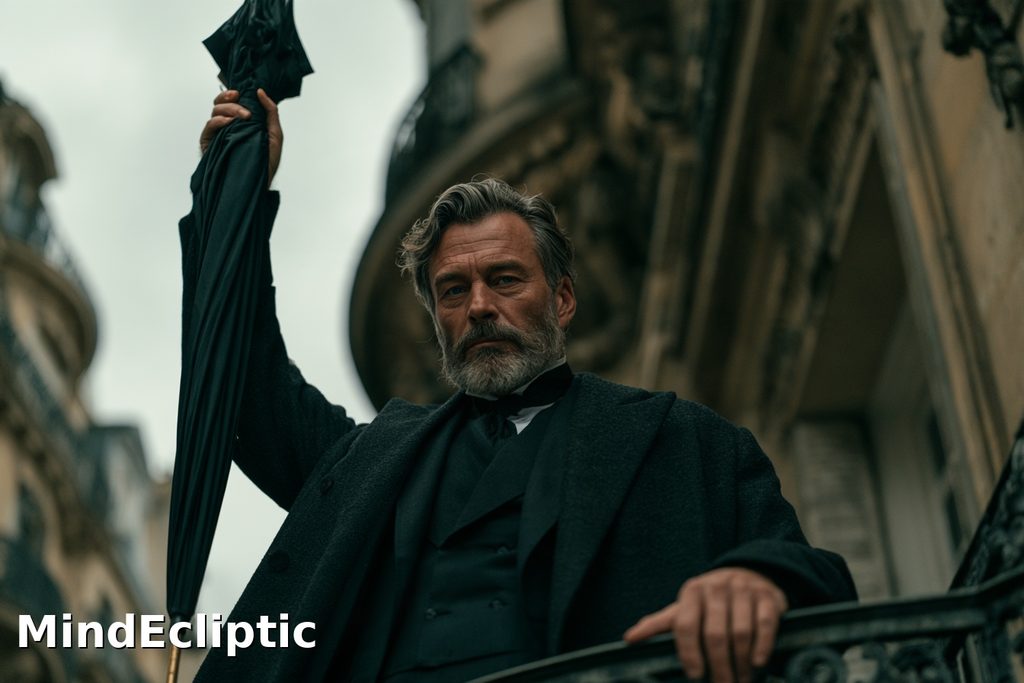
When Logic Starts Replacing Intimacy
The King of Swords is one of the most mentally controlled figures in Tarot. He thinks before he reacts, separates facts from feelings, and usually prefers a difficult truth to a comforting illusion. In many situations, that makes him exceptionally strong. He can stay calm under pressure, make hard decisions, and see consequences other people miss.
The problem begins when the same qualities that create clarity also create distance.
In relationships, the King of Swords may believe that being fair, consistent, responsible, and rational should be enough. If the relationship functions, agreements are respected, and practical problems are handled, he may see little reason to question the emotional foundation underneath it. But a relationship can be perfectly organized and still leave one person feeling unseen, unheard, or emotionally alone.
That is the central tension of this card: the King of Swords can understand a relationship brilliantly without always knowing how to emotionally inhabit it.
👑 Who Is the King of Swords, Beyond Love?
Before looking at romance, it helps to understand the King of Swords as a personality. This is the mature authority of the Swords suit: intellect that has moved beyond curiosity and impulsive argument into judgment, strategy, responsibility, and control.
He wants facts before conclusions and prefers evidence to rumors. He notices contradictions quickly, looks for cause and effect, and usually wants to understand the whole structure of a problem rather than react to one dramatic moment. When mature, he can step back from emotional noise and see what is actually happening.
He is often extremely effective when something real needs to be handled. A crisis happens, and he organizes. There is a difficult negotiation, and he prepares. Documents, money, practical decisions, legal matters, complicated conversations, or situations that require someone to stay calm can bring out some of his strongest qualities.
The King of Swords protects through competence. His version of reassurance may not be, “Don’t worry, everything will be okay.” It may be, “I’ve already spoken to them. Here is what happens next.” He often shows care by solving what can be solved rather than emotionally narrating how much he cares.
His word also matters to him. He is not necessarily the person who promises forever during an emotional evening. In fact, he may promise less than others because he thinks before speaking. But when mature, his internal rule is simple: if he said he would do something, he should do it. Otherwise, his words have no value.
This does not make him the King of Pentacles. The King of Pentacles demonstrates reliability through steady presence, practical care, resources, and consistency. The King of Swords demonstrates it through logical consistency, accountability, and responsibility for his own word.
He is also highly self-sufficient. He does not necessarily need constant messages, endless reassurance, or dramatic declarations to feel secure. He respects independent thinking and often prefers a partner who can stand beside him as an equal rather than someone who disappears into his identity.
At his best, he is rational without being cruel, authoritative without being controlling, independent without being emotionally absent, and capable of making difficult decisions without losing perspective.
At his worst, intelligence becomes power. Every conversation begins to resemble a courtroom in which he is the lawyer, the judge, and the person deciding which evidence counts.
🃏 King of Swords in a Romantic Tarot Context
In love, the King of Swords is rarely driven primarily by romance. He wants the relationship to make sense. He wants to know what you are to each other, what has been agreed, what is acceptable, where the boundaries are, and whether the relationship can actually work in the long term.
He can love someone intensely and still ask whether the connection is rational, compatible, respectful, and sustainable. Strong feelings alone do not automatically persuade him to stay. That can be one of his greatest strengths, and one of the most painful things about him.
The King of Swords may genuinely love someone and still decide that love is not a sufficient reason to continue. He can separate sexual attraction from compatibility, affection from long-term viability, and nostalgia from a real reason to return. Missing someone after a breakup does not automatically change the conclusion he reached about the relationship.
He also differs sharply from the other Swords court cards. The Page watches because he wants to understand what is happening. The Knight wants an answer and goes after it. The Queen watches behavior and lets patterns speak for themselves. The King often believes he has already reached a reasonable conclusion. If someone thinks he is wrong, he expects them to come and explain why.
That attitude can create enormous emotional distance. He may not chase clarification, demand another conversation, or repeatedly ask what went wrong. His position may simply be: if you have something important to say, say it. If you want to repair the relationship, show me how. If you need something from me, be clear.
To him, that may feel mature.
To the other person, it can feel like being left alone with the entire emotional burden of the relationship.
💘 King of Swords in New or Potential Relationships
Early dating with the King of Swords can feel refreshingly adult, or strangely formal. He is usually less interested in romantic performance than in whether the connection has substance, whether the other person is consistent, and whether what is developing between them actually makes sense.
Bright Side
• Logical judgment: He tries to separate attraction from evidence. A strong first impression does not automatically become a fantasy about who you might be.
• Serious words: He tends to think before making promises. If he says he wants exclusivity, commitment, or a future, the statement is more likely to have been considered rather than spoken for effect.
• Clear intentions: He can define what he wants from a relationship with unusual precision. Ambiguous situations are rarely his preferred long-term arrangement.
• Strong boundaries: He knows what he considers acceptable and expects boundaries to be stated clearly rather than communicated through hints or tests.
• Respect for independence: He usually does not need a partner to report every movement or provide constant proof of affection.
• Intellectual attraction: He respects intelligence, independent thinking, strong arguments, and a person who can disagree with him without collapsing or playing games.
• Realistic evaluation: Chemistry does not automatically blind him to incompatibility. He can enjoy attraction while still noticing that two lives may not fit together.
• Resistance to manipulation: Jealousy games, dramatic threats, emotional blackmail, and attempts to provoke him do not easily produce the desired reaction when he is functioning well.
• Controlled impulses: He is less likely than the Knight to make a major romantic decision simply because he is angry, jealous, infatuated, or sexually overwhelmed in that moment.
• Fact-based trust: Contradictory stories, shifting explanations, and obvious inconsistencies are difficult to sell to him.
• Calm under pressure: A difficult conversation does not automatically overwhelm him. He can stay composed while the emotional temperature rises.
• Willingness to face uncomfortable truths: He does not need a pleasant answer. He needs one he considers accurate.
• Long-term thinking: Before committing, he may already be thinking about the practical consequences of the relationship, not only how exciting it feels today.
• Deliberate choice: When he genuinely chooses someone, that choice has usually survived analysis. He is not simply following the strongest feeling in the room.
Shadow Side
The difficulty is that dating another person is not the same as conducting due diligence. The King’s intelligence can protect him from obvious mistakes, but it can also prevent the emotional uncertainty that intimacy inevitably requires.
• Emotional coldness: You may know he is interested intellectually without ever feeling emotionally wanted.
• Difficulty showing affection: He can care deeply while giving very little visible reassurance.
• Vulnerability feels dangerous: “I miss you” can be harder for him than explaining an entire relationship problem.
• He may hide how invested he is: Showing more interest can feel like giving away leverage.
• Rationalizing attraction: Instead of allowing himself to feel something, he can immediately begin analyzing whether the feeling is sensible.
• Emotional superiority: A more expressive partner may be quietly classified as irrational, dramatic, or weak.
• Demanding perfect communication: He may insist that difficult feelings be presented calmly, logically, and in exactly the form he considers acceptable.
• Missing the message because of the delivery: Someone may be saying something important through tears, anger, or confusion, and he rejects the content because he dislikes the way it was expressed.
• Turning dates into evaluation: The connection can begin to feel less like discovery and more like an interview for a position.
• Extremely high standards: He may decide very early that one characteristic makes the entire relationship impractical.
• Limited second chances: If he concludes that trust has been logically compromised, emotional explanations may have little influence afterward.
• Pride around initiative: If communication slows, he may simply wait. His position becomes: “If they want to talk, they can contact me.”
• Strategic silence: Instead of reaching out because he misses someone, he may deliberately wait to see what they do.
• Testing without appearing to test: “Let’s see whether she writes first.” “If he really cares, he’ll come back.” The King may already know what he feels; he is testing the other person’s choice.
• Relationship power calculations: Who contacted whom first? Who apologized? Who needs the other person more? Who is in the weaker position? Love begins to resemble negotiation.
• Excessive self-control: The spontaneous, awkward, irrational moments that often create intimacy can disappear because every move is calculated.
💍 King of Swords in Long-Term or Committed Relationships
In a mature partnership, the King of Swords can be one of the most capable people to have beside you when life becomes difficult. He can think when everyone else is panicking, negotiate when nobody knows what to say, and make decisions when everyone else is frozen.
But capability is not the same as emotional intimacy. A person can make a relationship function exceptionally well and still leave their partner feeling profoundly alone. That is where this card becomes much more complicated.
Positive Aspects
• He solves concrete problems: When something goes wrong, he looks for the next useful action instead of becoming trapped in emotional chaos.
• His word carries weight: An intentional promise is usually treated as an obligation.
• He values clear agreements: Expectations, responsibilities, finances, boundaries, and practical arrangements are easier when both partners know exactly what has been decided.
• He thinks beyond the immediate conflict: A mature King looks at context, patterns, consequences, and what brought the relationship to this point.
• He can be fair: He is capable of saying, “I was wrong here, and you were wrong there,” rather than automatically defending himself or the person he loves.
• He can remain objective during conflict: Love does not require him to pretend that his partner is always right.
• He does not need constant drama to feel connected: Stability is not boring to him simply because nobody is fighting.
• He is excellent in crisis: When practical decisions need to be made quickly, he can become the calm center of the situation.
• He protects through competence: He may defend the relationship through negotiation, planning, knowledge, or decisive action rather than romantic speeches.
• He can represent the couple’s interests strongly: He is often comfortable handling difficult conversations with outsiders.
• He values truth over comfort: If something is genuinely wrong, he would rather identify it than pretend everything is fine.
• He plans well: Long-term consequences matter. He is rarely thinking only about what will make tonight easier.
• He gives space: After conflict, he can tolerate silence and distance without assuming the relationship is immediately collapsing.
• He does not chase from panic: Fear of losing someone does not automatically make him abandon dignity or boundaries.
• He respects a strong partner: He generally wants someone with an identity, opinions, competence, and a mind of their own.
• He can build on responsibility: At his best, the relationship is structured around honesty, respect, reliability, clear boundaries, and mutual accountability.
• His love often looks practical: He may express devotion by solving the problem, keeping the agreement, taking responsibility, and making sure what he promised actually happens.
Challenging Aspects
This is where the King of Swords can become one of the most difficult court cards in relationships. Not because he necessarily creates obvious chaos, but because everything can remain remarkably calm while one partner slowly stops feeling emotionally equal.
• He can be emotionally cold: The relationship functions, but warmth is missing.
• He may love without making the partner feel loved: Responsibility is present. Affection is not always visible.
• He struggles with vulnerable language: “I’m afraid of losing you” can feel almost impossible to say.
• He rationalizes emotions: Instead of admitting pain, jealousy, fear, or need, he explains them.
• He suppresses feelings: Emotion can become so tightly controlled that it barely appears in the relationship at all.
• He may see emotional expression as weakness: Tears become “irrationality.” Anxiety becomes “overreaction.” Hurt becomes “poor reasoning.”
• He can invalidate emotion with facts: A partner says, “That hurt me.” The King explains why, objectively, they should not have been hurt.
• He can argue against someone’s feelings: The conversation shifts from “This is what I felt” to “Your interpretation is incorrect.”
• He can overwhelm a partner with logic: His reasoning may be so structured that the other person begins doubting their own understanding of what happened.
• Intelligence can become authority: He does not merely present an argument. He decides which argument is reasonable.
• Conversations can become trials: Evidence is introduced, language is dissected, motives are examined, and eventually a verdict appears.
• He appoints himself judge: He decides whether your explanation is logical enough, complete enough, or believable enough.
• He may apply a double standard: You are expected to explain everything clearly. He shares only what he personally considers relevant.
• “I already explained this” can end discussions unilaterally: For him, the issue is logically closed even though the partner still needs emotional resolution.
• He may not understand emotional aftermath: The problem has been technically solved, so he moves on. His partner is still devastated by how the conversation happened.
• Rules can become control: Boundaries stop being mutual agreements and become laws written by one person.
• His version of compromise can become: “I heard what you said, and I have decided what is reasonable.”
• He can be authoritarian: Calmness does not automatically equal fairness.
• He overestimates his own objectivity: Being articulate and controlled does not make someone free from bias.
• He can rationalize nearly anything he does: There is always an explanation for why his behavior was justified.
• Admitting error can be difficult: Especially when the mistake threatens the entire logical interpretation he has built.
• He may move the standard of proof: Just as one objection is answered, another appears, allowing him to remain correct.
• Intellectual superiority can become contempt: Sarcasm, condescension, and phrases like “Think about what you’re saying” can place the partner permanently below him.
• His words can be surgically cruel: The Knight may wound impulsively. The King can know exactly where the weak point is and choose one sentence deliberately.
• He may justify cruelty as honesty: “I was only telling you the truth.”
• He can treat tact as unnecessary: If something is true, he may believe softness only dilutes the message.
• Emotional distance can preserve power: If he never shows how much he needs you, you never know how much power you have to hurt him.
• He may refuse to make the first move after conflict: Not because he feels nothing, but because reaching out can feel like admitting fault or losing position.
• He can wait indefinitely: For you to write. For you to apologize. For you to explain yourself. For you to repair what he believes you damaged.
• He can lose a relationship that one message could have saved.
• He may miss you and do nothing.
• He may want reconciliation and still do nothing.
• Silence can become a power move: “If she needs me, she’ll come.”
• Distance can become pressure: The goal is no longer space but forcing the other person to yield first.
• He can turn love into strategic negotiation: Who needs whom more? Who has more control? Who gives in first?
• He may mistake initiative for weakness: Even when he wants peace, pride stops him from reaching for it.
• He can expect a partner to know how to repair the situation: Without ever clearly explaining what he needs.
• He may create emotional examinations: “Let’s see what she does now.” A relationship becomes a test the other person does not know they are taking.
• He can be excessively strategic: Every message, pause, apology, and concession is measured for its effect.
• He may sacrifice spontaneity for control: Nothing is allowed to happen naturally because every move has consequences.
• He can be unforgiving: Once trust is classified as broken beyond reason, he may close the case permanently.
• He can cut someone off with remarkable coldness.
• He may continue to love someone and still refuse to return: Missing them does not change his conclusion.
• Nostalgia rarely wins an argument against principle.
• He can sacrifice the relationship to preserve a rule: Sometimes the principle becomes more important than the actual person standing in front of him.
• He may be excessively demanding: Emotional maturity, rational communication, self-control, and consistency are expected at a very high level.
• Chaotic or highly impulsive partners can exhaust him quickly.
• He may show contempt for weakness rather than compassion for it.
• Comfort does not come naturally: When a partner is hurting, he may immediately ask, “What are you going to do about it?”
• His care can feel like consulting: You came for a hug. You received a strategy.
• He may try to fix emotional pain instead of accompanying someone through it.
• He prefers direct communication but can reject it when it arrives too emotionally.
• He may police the tone of the conversation: “Come back when you can speak properly.”
• He becomes the person who defines what “properly” means.
• Emotional safety can disappear even without shouting.
• In extreme shadow, intelligence, language, certainty, and authority can become tools of psychological control.
The most unsettling version of this dynamic may look completely civilized from the outside. There is no screaming, no broken furniture, and perhaps no obvious chaos at all. Yet after conversation after conversation, the partner somehow leaves feeling less intelligent, less reasonable, and increasingly responsible for everything that has gone wrong.
• Betrayal can make him extremely uncompromising: Once the evidence meets his internal standard, emotional explanations may no longer matter.
• He can reduce a person to their worst mistake.
• Cold silence may replace open confrontation.
• He can remove emotional access without formally ending the relationship.
• He can tolerate emotional distance for a very long time and call the relationship functional.
• A partnership with him can look perfectly organized from outside and still feel lonely inside.
This may be the deepest shadow of the King of Swords. Everything can be handled: bills paid, responsibilities managed, plans organized, practical problems solved. The relationship may function so efficiently that he assumes there is no serious problem, while nobody has asked the much more uncomfortable question: “Are you actually happy with me?”
The King of Swords can confuse a relationship that functions with a relationship that is alive. Strong rationality can create security, but when it consistently replaces tenderness, the result may be a partnership that feels safe in practical terms and profoundly lonely in emotional ones.
⚠️ Pitfalls and Shadow Side
The King of Swords rarely loses control because he feels too much. His deeper danger is believing that control itself proves he is right, and that whoever remains calmer, more articulate, or more logical must therefore understand the relationship better.
• Mistaking emotional restraint for emotional maturity: Being calm during conflict is valuable. Being disconnected from what either person feels is not.
• Confusing objectivity with personal perspective: A logical conclusion can still contain fear, pride, old wounds, and self-interest.
• Making communication conditional on perfect delivery: A partner should not need courtroom-level composure before their pain deserves to be heard.
• Turning boundaries into authority: A boundary describes what you will do. A rule imposed on another adult is something different.
• Making the partner earn the right to be believed: Constantly requiring proof creates a relationship where one person is always defending themselves.
• Believing the person who argues best must be correct: Verbal skill is not evidence.
• Treating emotional needs as inefficient problems: Not everything needs a solution. Sometimes a person needs empathy before strategy.
• Protecting dignity at the cost of connection: Refusing to make the first move can preserve pride while destroying the relationship.
• Turning silence into leverage: Space allows both people to regulate. Silence designed to make the other person surrender is control.
• Testing love instead of participating in it: “If they really care, they will come to me” can become a self-fulfilling loss.
• Letting principle erase context: Standards matter, but rigid rules cannot account for every human mistake.
• Assuming practical security is enough: A relationship can be stable, organized, loyal, and profoundly lonely.
• Believing that not fighting means nothing is wrong: Emotional disconnection can exist quietly for years.
• Becoming so competent that tenderness feels unnecessary: Solving every practical problem cannot replace affection.
• Winning every argument and eventually having nobody left to argue with: Rational superiority is a poor substitute for emotional partnership.
🔗 Key Combinations: King of Swords with Other Cards in Romance
The King of Swords rarely becomes softer simply because another card appears beside him. More often, the second card shows what his logic is being applied to — love, fear, control, uncertainty, commitment, or a difficult truth.
Card order can matter. When the King of Swords appears first, he often shows the mindset, decision, or person taking control of the situation. When he appears after another card, he may show the conclusion reached after that experience.
• King of Swords + The Lovers: Feelings are present, but the decision cannot be made on attraction alone. This combination can point to a relationship being evaluated through compatibility, values, long-term consequences, and conscious choice. In shadow, the King may analyze love so thoroughly that the emotional part of the decision almost disappears.
• King of Swords + Queen of Swords: Two highly independent, intelligent people who may understand each other intellectually very well. There can be respect, honesty, strong boundaries, and unusually direct communication. The risk is emotional distance: both may wait for the other to soften first, and the relationship can become correct, controlled, and surprisingly cold.
• King of Swords + The Devil: Logic and control enter a much darker territory. The King may recognize manipulation, dependency, obsession, or a power imbalance and try to cut through it rationally. In shadow, however, intelligence itself can become part of the control dynamic — arguments, rules, silence, or psychological pressure may be used to maintain the upper hand.
• King of Swords + The Moon: The King wants evidence, while the Moon creates uncertainty. Mixed signals, incomplete information, fear, suspicion, or things that cannot yet be proven can make this combination especially uncomfortable for him. At its best, it asks for patience before reaching a verdict; at its worst, the King may mistake an interpretation for a fact simply because uncertainty feels intolerable.
• King of Swords + The Tower: A truth, revelation, or major disruption forces a decision. The King may respond by cutting through chaos quickly, separating emotion from facts, and deciding what can or cannot continue. In romance, this can show the moment when the structure of a relationship is judged after something fundamental has changed.
• King of Swords + Justice: One of the clearest combinations for accountability, consequences, fairness, and serious relationship decisions. Agreements, boundaries, promises, and responsibility become central. In shadow, the relationship can begin to feel overly legalistic — as if every mistake requires a verdict and every disagreement needs someone to be objectively right.
• King of Swords + The Emperor: Authority becomes even stronger. This can describe a relationship built on structure, responsibility, leadership, and clearly defined roles. But if both energies move into shadow, flexibility disappears quickly: one person may decide what is reasonable, what is allowed, and how the relationship should function without leaving enough room for emotional negotiation.
• King of Swords + Two of Cups: This combination softens the King without removing his need for clarity. Mutual feelings and emotional reciprocity are possible, but he still wants the connection to be defined, respected, and consistent. It is a useful reminder that rationality and emotional partnership do not have to compete when both people are willing to meet each other openly.
🎭 Real-Life Examples: King of Swords in Action
Olivia and James argued on Friday night. Olivia left upset and expected James to contact her once they had both calmed down. James missed her all weekend, checked his phone several times, and thought about how the conversation could have gone differently, but he still did not write. In his mind, she had ended the conversation and left; if she wanted to repair things, she could contact him. By Monday, both were waiting for the other person, even though neither actually wanted the relationship to end.
Adrian was the person everyone relied on when something went wrong. He handled contracts, solved financial problems, organized family emergencies, and never broke a serious promise. His partner trusted him completely in practical matters. But when she finally said, “I feel lonely with you,” he responded by listing everything he did for the relationship. Nothing on his list was false. That was precisely the problem: he answered an emotional question with evidence of competence.
Sophie discovered something she considered a serious breach of trust. Her partner tried to explain the context, apologized, and asked for another chance. She listened calmly, asked a few precise questions, and made her decision without screaming or dramatic threats. Months later, she still had feelings, but she did not return. Missing someone was not enough to change what she believed the evidence had shown her.
💡 Advice and Takeaway
• Let logic inform love without replacing it. A relationship needs clear thinking, but it also needs warmth, empathy, and emotional risk.
• If you need an explanation, ask for one. Waiting for someone to prove their love by reading your mind is still a test.
• Do not confuse making the first move with losing power. Sometimes the strongest position is simply saying, “I don’t want this distance between us.”
• Listen for the feeling underneath the argument. Not every emotional statement needs to survive cross-examination before it deserves compassion.
• Judge patterns carefully, but leave room for repair. A repeated betrayal and one human mistake are not the same thing.
The King of Swords can be one of the most reliable people in a relationship. He may keep his word when everyone else is making promises, remain calm when everyone else is panicking, solve the problem nobody else knows how to solve, and love far more deeply than he ever says.
But love cannot live entirely inside a decision. At some point, another person needs to feel it. That may be the King of Swords’ hardest lesson: being right about the relationship is not the same as being emotionally present inside it.
Sometimes the message he refuses to send because “they should come to me” is exactly the message that could have saved the connection. Sometimes the principle he protects so carefully becomes more expensive than the vulnerability he was trying to avoid.
And in the end, the most important question may not be, “Who was right?”
It may be: “Was protecting my position worth losing the person?”
📌 his article is part of the MindEcliptic.com Romantic Tarot series (AvaRomance). For more on Tarot archetypes and relationship wisdom, explore our other card guides and share your own King of Swords stories in the comments below.
—
If this article was helpful and you’d like to say thank you, you can buy me a coffee here.