⚔️ Ten of Swords in Love: The Moment It Ends for Real
You didn’t think it would end like this. Not this way. Not this final. But it did. And now there’s nothing left to hold on to. In this article, we will explore how the Ten of Swords reveals the final ending in love, and why this painful moment is also the beginning of something new.
When You Know There’s No Way Back
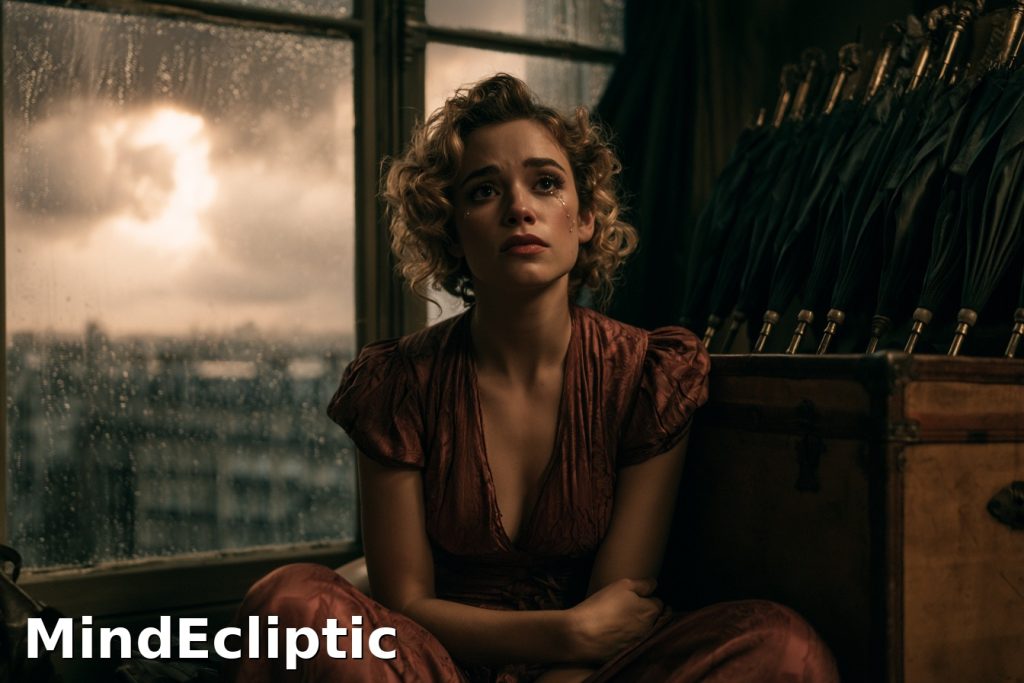
There’s a moment in love when you stop asking questions. Not because you got the answers you wanted, but because you didn’t. Has the Ten of Swords appeared in your love reading? Then something has already ended. Not emotionally, not gradually: completely. You thought there was still time. You thought it could be fixed. You didn’t think it would go this far. But it did.
This is not uncertainty. This is not a pause. This is the point where something breaks in a way that cannot be undone. The Eight of Swords is fear. The Nine of Swords is pain. The Ten of Swords is the moment you realize it’s truly over. And that realization hits differently. It’s not loud. It’s heavy. It’s final.
🃏 Ten of Swords in a Romantic Tarot Context
The Ten of Swords represents a complete ending. In love, this is the collapse of the relationship as you knew it. Not distance, not confusion, but a full stop. Psychologically, this card is about the breakdown of illusion. What you believed in, what you expected, what you built emotionally: it no longer holds.
At its highest level, this card brings clarity. There is no more guessing, no more waiting, no more mixed signals. You see things exactly as they are. At its lowest, it reflects betrayal, shock, and emotional devastation. It often appears in situations where trust is broken so deeply that returning is no longer possible.
This is where you realize: it’s not about trying harder. It’s about accepting that it’s finished.
💘 Ten of Swords in New or Potential Relationships
When this card appears early, it doesn’t drag things out. It ends them.
Bright Side
When this card appears early, it signals one thing: the connection is not meant to develop, and it will end in a clear, irreversible way.
Immediate clarity: You find out the truth early — dishonesty, mixed intentions, or incompatibility becomes obvious before deep attachment forms.
- No wasted time: The connection ends before you invest emotionally, mentally, or physically.
- Pattern recognition: You notice familiar red flags, inconsistency, avoidance, lack of integrity, and stop the dynamic before it repeats.
- Emotional self-protection: You choose to walk away instead of trying to “fix” something unstable.
- Clean break: The ending happens decisively, without months of confusion or emotional limbo.
- Reality over illusion: You see the situation as it is, not as you hoped it would become.
- Boundaries in action: You don’t tolerate behavior that contradicts your values.
- Space for something real: By ending this early, you don’t block future connections that actually have potential.
Shadow Side
- Sudden ending: The connection stops abruptly: a message, a reveal, or a shift that changes everything instantly.
- Shock response: You didn’t expect it to end this way, and your system struggles to process it.
- Early betrayal: Lies, hidden intentions, or parallel involvement may surface quickly.
- No closure: The person disappears, avoids explanation, or gives answers that don’t make sense.
- Mental replay: You go over messages, actions, and moments trying to find where it broke.
- Self-blame: You assume you did something wrong, even when the issue wasn’t yours.
- Emotional whiplash: One moment there was potential, the next: nothing.
- Loss of trust: You become more guarded in future connections.
- Overgeneralization: You start thinking “this always happens to me.”
- Attachment cut too fast: Feelings were forming, but the connection ends before they stabilize.
- Confusion between intuition and anxiety: You question whether you missed signs or imagined them.
- Withdrawal: You hesitate to open up again after the experience.
- Difficulty accepting the end: Even knowing it’s over, you keep checking, waiting, or hoping.
- Internal collapse of expectation: Not just the connection ends: the idea of what it could be ends too.
💍 Ten of Swords in Long-Term or Committed Relationships
In long-term relationships, the Ten of Swords doesn’t signal a crisis: it signals that the crisis has already reached its limit and the relationship has crossed a point of no return. This is not about “maybe we can fix it.” This is about realizing it can’t be fixed anymore.
Positive Aspects
• Final closure: The relationship reaches a clear and irreversible ending: no more ambiguity, mixed signals, or false hope.
• End of prolonged suffering: Repeated conflicts, emotional instability, or ongoing tension finally stop escalating.
• Clarity after confusion: You see the relationship as it actually was, not as you hoped it would become.
• Release from emotional cycles: No more repeating the same arguments, patterns, or attempts to fix what is no longer working.
• Acceptance of reality: You stop negotiating with what has already ended.
• Emotional detachment begins: The bond weakens enough to allow real separation.
• Identity reconstruction: You begin to understand who you are outside of this relationship.
• Space for a new life: The ending creates actual room for new experiences, not just theoretical “moving on.”
Challenging Aspects
• Irreversible breakup: The relationship ends in a way that cannot return to its previous form.
• Betrayal or trust collapse: One event or accumulated behavior destroys the foundation of the connection.
• Sudden loss of shared future: Plans, routines, and long-term expectations disappear instantly.
• Emotional shutdown: Instead of just sadness, there is numbness or a feeling of internal emptiness.
• Loss of trust in relationships: You question whether emotional safety is even possible.
• Existential impact: It feels like not just the relationship ended, but a version of your life ended with it.
• Mental replay of the ending: You revisit the final conversations, actions, or moments repeatedly.
• Self-worth damage: You start asking “what’s wrong with me?” instead of seeing the full dynamic.
• Inability to detach immediately: Even knowing it’s over, emotional attachment remains active.
• Psychological shock: The mind struggles to fully accept the finality of what happened.
• Resistance to closure: Attempts to reconnect, explain, or “fix” continue despite the outcome.
• Emotional exhaustion: After prolonged struggle, there is nothing left to give.
• Collapse of emotional stability: Daily functioning, focus, or motivation may drop significantly.
• Feeling that life is over: Not metaphorically, but as a real internal perception that nothing meaningful remains ahead.
⚠️ Pitfalls and Shadow Side
• Romanticizing the ending: Rewriting the past as better than it was, which keeps you emotionally attached.
• Searching for meaning where there is none: Trying to find a “hidden explanation” instead of accepting what happened.
• Needing closure from the other person: Waiting for answers or apologies that may never come.
• Reopening the wound: Checking messages, social media, or trying to reconnect “one last time.”
• Attachment to the pain: Staying in the emotional intensity because it feels more real than emptiness.
• Confusing pain with love: Believing that the depth of suffering reflects the depth of the connection.
• Over-identifying with the story: Turning the breakup into your personal narrative (“this always happens to me”).
• Projecting the past onto the future: Expecting new relationships to follow the same pattern.
• Avoiding new emotional risk: Choosing isolation over the possibility of being hurt again.
• Losing personal direction: Letting the ending define your decisions, priorities, and sense of self.
• Emotional burnout: Not just sadness, but a lack of energy to engage with life at all.
• Repeating internal dialogue: Mentally replaying “what went wrong” instead of integrating the experience.
• Subconscious self-sabotage: Blocking new opportunities because part of you is still tied to the past.
• Refusing to rebuild: Staying in the aftermath instead of gradually creating a new emotional reality.
🔗 Key Combinations
When interpreting combinations, it’s important to consider position. The meanings below apply when the Ten of Swords appears before another card, showing the cause, trigger, or nature of the ending. If the Ten of Swords appears after, the meaning can shift, reflecting consequences, recovery, or what follows the ending rather than the event itself.
Ten of Swords + The Tower. A final and irreversible collapse. This is not just conflict: it is a complete breakdown of the relationship, often triggered by sudden truth, betrayal, or an event that cannot be undone. Something hidden may come to light and become the final point that ends everything. There is no gradual decline here: the ending is sharp, absolute, and undeniable.
Ten of Swords + The Devil. Ending a toxic cycle, but with risk. The relationship may involve strong manipulation, control, or emotional dependency. Even after the breakup, the other person may try to pull you back in, through guilt, pressure, or emotional hooks. This combination warns that the ending itself is necessary, but not always final on a psychological level unless boundaries are fully enforced.
Ten of Swords + The Star. Hope after devastation. This combination reflects emotional recovery after a very difficult experience. At first, there is no relief, only emptiness, but gradually, healing begins. The connection may end, but it opens the path to a calmer, healthier emotional state. This is not instant positivity, but the quiet return of hope after everything has fallen apart.
Ten of Swords + The Sun. Clarity and exposure. Everything becomes visible: truth, intentions, and the real nature of the relationship. In a positive expression, this shows that the ending ultimately leads to something better, bringing relief and emotional clarity. In its shadow, it may indicate that the breakup was driven by pride, ego, or selfish behavior, or that after the ending, one of the partners acts in a self-centered, emotionally detached way.
🎭 Real-Life Examples
Lena saw one message: and everything ended in that moment. No explanation, no long conversation. Just a clear, irreversible truth.
Mark tried for years to fix his relationship. When it finally ended, he realized he had been holding on to something that was already gone.
Sofia kept waiting after the breakup. One day she understood nothing was coming back. That realization hurt, but it also freed her.
💡 Advice and Takeaway
• Accept that it’s over, resisting it only makes it worse
• Don’t rewrite reality to make it easier to accept
• Understand that the worst has already happened
• Separate your worth from the relationship
• Give yourself permission to rebuild
The Ten of Swords feels like the end of everything. But it’s not. It’s the end of what couldn’t continue. And once that’s gone, even if it doesn’t feel like it yet: you are free to begin again.
📌 This article is part of the MindEcliptic.com Romantic Tarot series (AvaRomance). For more on Tarot archetypes and relationship wisdom, explore our other card guides and share your own Ten of Swords stories in the comments below.
—
If this article was helpful and you’d like to say thank you, you can buy me a coffee here.